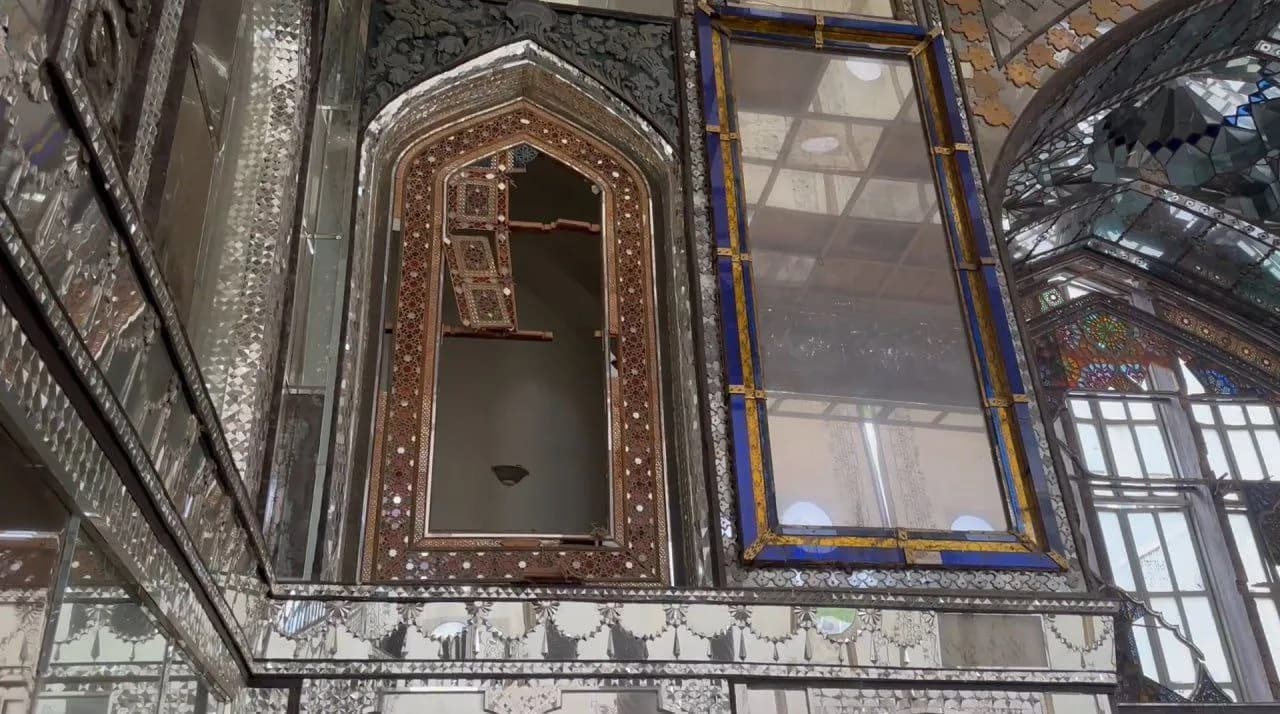
Damage to Golestan Palace UNESCO World Heritage Site
1 Mar 2026 · Night
Arg Square (Meydan-e Arg), 15 Khordad Street, central Tehran, Tehran, Tehran
Perpetrator: Unknown
Claimed target: Police command/law enforcement building
Stage 1 · Reported
Description
On the night of Sunday 1 March 2026 (10 Esfand 1404), joint US-Israeli strikes hit Arg Square (Meydan-e Arg) on 15 Khordad Street in central Tehran. The square sits within the formally designated buffer zone of the Golestan Palace complex — Tehran's sole UNESCO World Heritage Site. The blast waves and shrapnel from the strike caused significant structural and decorative damage throughout the palace. Confirmed damage includes: traditional orsi-style stained wooden windows, historic wooden doors, sections of the palace's renowned mirror-work (āyeneh-kāri), the Hall of the Marble Throne (Eyvan-e Takht-e Marmar) — described by heritage experts as comparable to Versailles' Hall of Mirrors — ornate gilded wood frames, decorative chandeliers, and mosaic glass panels. Photos published by Iranian media (ISNA, Mehr, Tasnim) and international wire agencies (AFP, Getty) showed glass and debris scattered across palace floors. Heritage expert Eskandar Mokhtari, who visited the site after the attack, reported that on the eastern side of Arg Square, one building (the old bazaar police station) was completely destroyed and a second (a counter-narcotics police building) was severely damaged. Iran's Deputy Minister of Cultural Heritage Ali Darabi confirmed the palace sustained serious damage, noting that it had been flying the Blue Shield protective emblem — the internationally recognised symbol under the 1954 Hague Convention marking cultural heritage sites — at the time of the attack. Minister of Cultural Heritage Seyed Reza Salehi-Amiri visited the palace on Monday 2 March, confirmed the damage, and stated that an official report would be submitted to UNESCO as the strike constitutes a violation of international law and cultural commitments. Iran's Ministry of Cultural Heritage filed a formal complaint with UNESCO and requested the organisation send representatives to document damage and assist with restoration. Museum artefacts had been proactively moved to secure vaults prior to the attack (following the 12-day war and January 2026 unrest), and were not harmed. UNESCO issued an official statement on 2 March 2026 confirming the palace "was reportedly damaged by debris and the shock wave" from the Arg Square strike and expressing "concern over the protection of cultural heritage sites." UNESCO noted it had communicated the geographical coordinates of all 29 Iranian World Heritage Sites to "all parties concerned" to prevent damage. UNESCO reiterated that cultural property is protected under the 1954 Hague Convention and the 1972 World Heritage Convention. Under the Rome Statute of the International Criminal Court, intentional attack on protected cultural heritage constitutes a war crime.
Location
Province
Tehran
City
Tehran
Detail
Arg Square (Meydan-e Arg), 15 Khordad Street, central Tehran
Coordinates
35.680339, 51.420549
Photos and media
Civilians killed in this incident
No profiles confirmed yet for this incident. Submit a name
Sources and documentation
www.entekhab.ir
www.khabaronline.ir
www.reuters.com

Dismay as ancient heritage sites across Iran damaged in US-Israel bombing
fararu.com
www.tabnak.ir

Airstrike on Tehran Damages Golestan Palace, UNESCO World Heritage Site - WANA

US-Israeli airstrike damages UNESCO-listed palace in Tehran
Tehran's Golestan Palace Damaged in US-Israel Bombing