
I. Overview
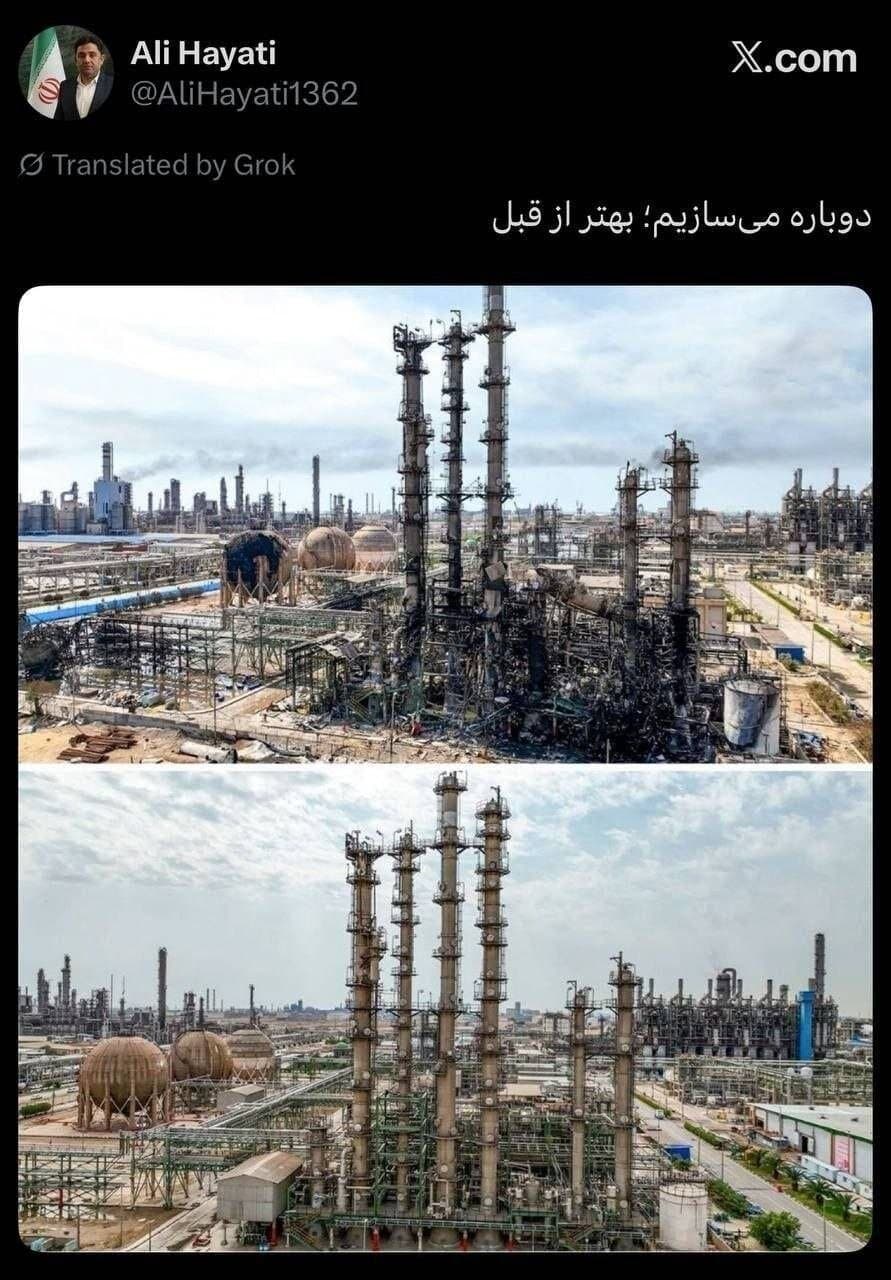
On 4 April 2026, the first working day after the Nowruz holiday, a sustained series of air strikes struck the Mahshahr Special Petrochemical Economic Zone and adjacent facilities at Bandar Imam Khomeini in Khuzestan Province.
COI's verified incident record states that three critical components were hit: Fajr Energy 1 and 2, the utility companies supplying electricity, steam, water, oxygen, nitrogen, and industrial gases to all 19 downstream petrochemical complexes in the zone; the water and power supply infrastructure for Bandar Imam Khomeini port and Petrochemical Razi; and a section of Petrochemical Karoun.
The strikes killed six workers employed by Fajr Energy 1 and 2 and injured 19 others across multiple facilities. COI's record also states that power was cut to approximately 500,000 residents of the Bandar Imam Khomeini and Mahshahr area, while production at 19 downstream petrochemical complexes was halted. The immediate casualties and physical damage are the first layer of the Mahshahr case. This analysis focuses on the second layer: the hidden civilian harm produced when a utility node is struck and the systems attached to it begin to fail.
II. The Facility as a Node
Fajr Energy was not only a facility inside an industrial zone. It was a node in a wider civilian and industrial service system. When a node is hit, the strike does not only damage what it touches. It disables what depends on it. That dependency is where the hidden harm of infrastructure strikes begins.
The six civilians killed were not abstract employees of an industrial complex. COI identifies them as workers from HSE, operations, and maintenance units. Their presence at the site was part of the civilian labor that keeps infrastructure functioning: monitoring safety, repairing equipment, operating systems, and preventing breakdown. In infrastructure strikes, workers often occupy a legally and humanly important position. They are closest to the object hit, their work is civilian, routine, and necessary for public and economic life.
III. Hidden Pathways of Harm
The first hidden pathway is power. A reported outage affecting approximately 500,000 residents is not only an energy disruption. It can alter household life, health services, food storage, water pumping, communications, and emergency response. COI does not yet have enough public data to map all these consequences in Mahshahr. The reported scale of the outage, however, makes them necessary questions for further documentation.
The second pathway is water. Electricity and water are not separate systems. In urban and industrial areas, water pumping, treatment, storage, and distribution often depend on power. A strike on energy infrastructure may therefore create water consequences even when water facilities are not the primary target.
The third pathway is work. Production stoppage is usually reported as economic damage. In a city where households depend directly or indirectly on the petrochemical zone, production stoppage can become household insecurity. Reports described uncertainty among workers after the shutdown, with shift, HSE, and security staff remaining on site while concerns grew over daily workers, contracts, wages, and the timing of any full return to production.
The fourth pathway is emergency capacity. After a strike on industrial and utility infrastructure, repair teams, safety units, emergency crews, firefighting capacity, diesel generation, and local administration may all be pulled into response mode. The hidden question is not only what the strike destroyed, but what capacity it consumed afterward.
The fifth pathway is environmental and health risk. Strikes on petrochemical and utility infrastructure may raise public-health and environmental questions depending on the materials released, fires triggered, containment measures taken, and duration of disruption. These effects require technical documentation. They should not be assumed without evidence, but they should not be excluded from the inquiry.
IV. Applicable Legal Framework
The legal analysis of an infrastructure strike cannot begin and end with the word infrastructure. The first question is whether the object was a civilian object or a military objective. The second is whether any expected incidental civilian harm was excessive in relation to the concrete and direct military advantage anticipated. The third is whether all feasible precautions were taken to avoid or minimize civilian harm. The civilian-serving functions of the object, and the foreseeable consequences of disabling those functions, must be examined.
If the downstream effects of striking a utility node were reasonably foreseeable, then the legal analysis cannot stop at the immediate blast radius. The proportionality and precautions questions must include the systems through which harm travels: electricity, water, emergency services, labor, hospitals, household stability, and the industrial safety measures needed to contain further damage.
The ICRC has warned that urban warfare endangers not only civilians, but also the infrastructure on which civilians depend, with humanitarian consequences that may persist long after the fighting ends. The ICRC President has also stated that deliberate attacks on essential services and civilian infrastructure can amount to war crimes.
V. Political and Narrative Significance
The political layer of the Mahshahr case lies in how civilian-serving infrastructure can be converted into military-economic language before civilian consequences are fully counted.
COI's record notes that Israeli officials framed the petrochemical and oil sectors as funding war-making capacity, while Iranian authorities, industry officials, and independent analysts rejected the characterization of the targeted facilities as military and described them as civilian energy and chemical infrastructure.
The political question is how a utility system becomes narratively transformed into capability, infrastructure, or economic pressure, while the workers, households, services, and dependencies connected to that system become background.
The hidden layer of civilian harm is often hidden by language first. A facility becomes a target. A node becomes capacity. A blackout becomes a statistic. A worker becomes an operational consequence. Report & Analysis should reverse that compression by restoring the civilian systems attached to the object hit.
VI. Questions Requiring Further Documentation
Further documentation should focus on: the duration and geographic scope of the blackout; any disruption to water pumping, treatment, or distribution; effects on hospitals, clinics, pharmacies, food storage, and communications; the status of daily, contract, and permanent workers after the shutdown; the availability of emergency generation and industrial safety capacity; any environmental or public-health consequences; and the targeting information, warnings, alternatives, and civilian-harm assessments considered before the strike.
VII. Conclusion
The Mahshahr case should not be documented only as an attack on an industrial zone. It should be documented as a test case in hidden civilian harm: how a strike on a utility node travels beyond the facility, beyond the death toll, beyond the first headline, and into the systems that keep a city alive.
Documentation cannot restore power, restart wages, repair damaged systems, or bring back the workers killed on duty. But it can ask the questions that the first layer of reporting often leaves behind.